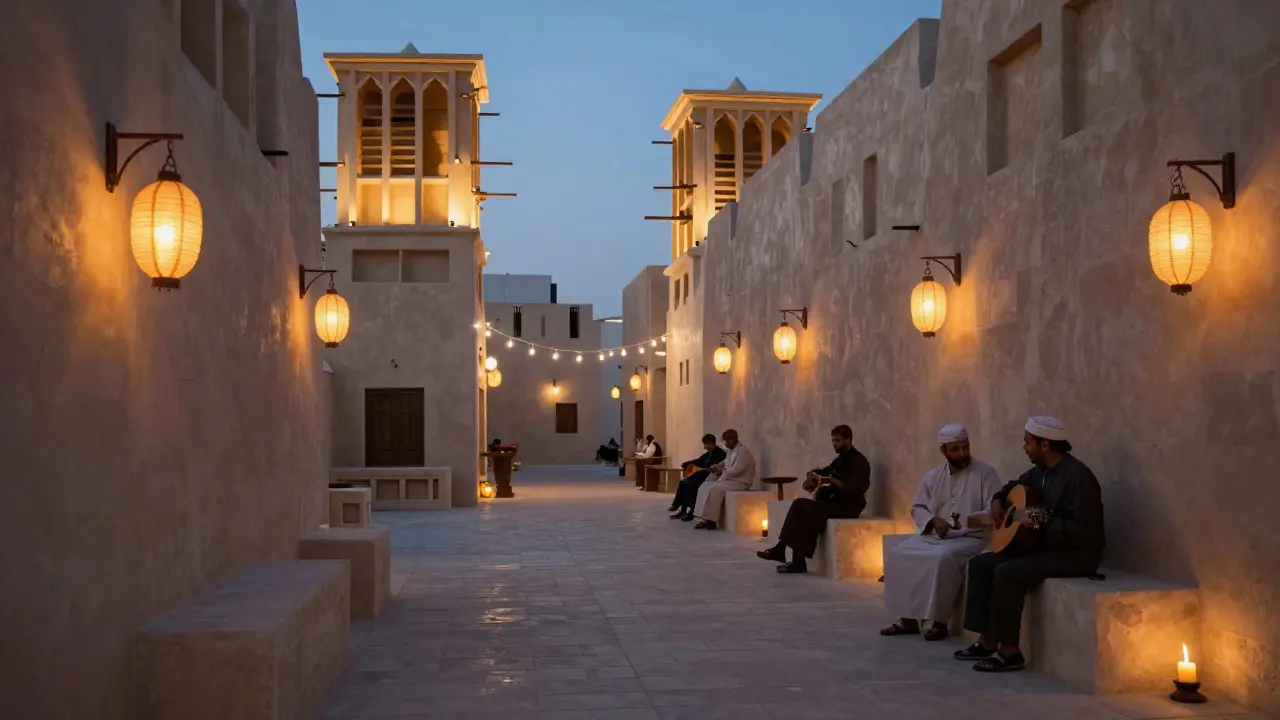
Dubai’s skyline glows with neon and glass, but if you want to feel the city’s real pulse after dark, you need to step away from the towers. Head south of the Dubai Creek, where the old stone buildings of Al Bastakiya and the narrow lanes of Dubai’s Old Town come alive in quiet, unexpected ways. This isn’t about clubs or bottle service. It’s about lantern-lit courtyards, the smell of cardamom coffee drifting from hidden cafés, and the sound of oud music floating through wind-carved alleys.
Al Bastakiya: Where History Meets Night
Al Bastakiya, also called Al Fahidi Historical Neighbourhood, was built in the late 1800s by wealthy Persian traders. Its wind towers, thick coral stone walls, and wooden mashrabiya screens weren’t just decorative-they kept homes cool long before air conditioning. Today, those same buildings house art galleries, boutique hotels, and intimate lounges that open at dusk.
Walk down Al Fahidi Street after 7 PM and you’ll see locals and visitors sipping Emirati tea on rooftop terraces. The lighting is low-candles, paper lanterns, string lights. No blaring speakers. Just the murmur of conversation and the occasional clink of a glass. Places like Al Fanar Restaurant & Café serve traditional dishes like machboos and harees under starlight, while Al Serkal Avenue’s converted warehouses host live jazz nights and poetry readings.
Don’t miss the Dubai Museum, housed in the 1787 Al Fahidi Fort. It closes at 8:30 PM, but the courtyard outside stays open. Sit on the stone benches, watch the moonlight hit the fort’s walls, and listen to the call to prayer echo softly from nearby mosques. It’s one of the few places in Dubai where time slows down.
Old Town’s Hidden Cafés and Tea Houses
Dubai’s Old Town doesn’t have bars. It has tea houses. And that’s the point.
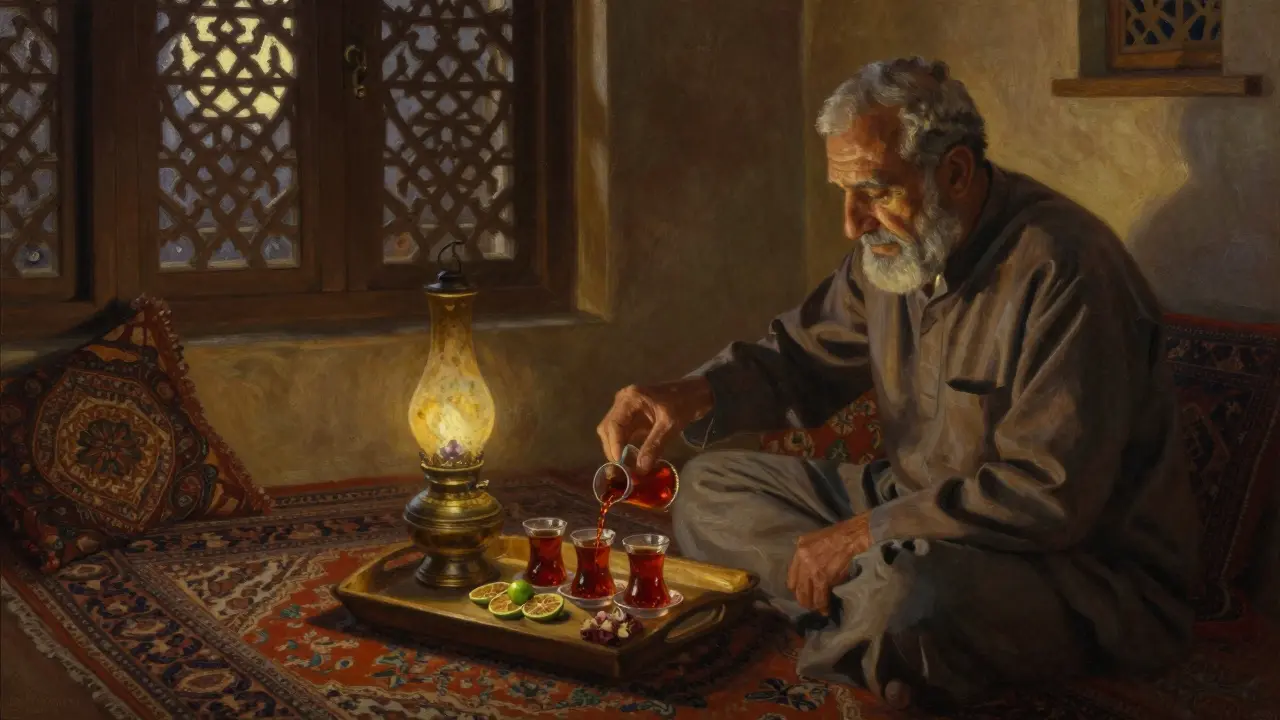
At Al Khayam Tea House, tucked behind a nondescript door on Al Seef Street, you’ll find locals sipping saffron-infused tea from tiny cups. The owner, Ahmed, has been serving it for 27 years. He doesn’t take photos. He doesn’t post on Instagram. He just asks, “How was your day?” and pours another cup. The tea is strong, sweet, and served with dried limes or rosewater syrup-no sugar on the side, no choices. It’s part of the ritual.
Down the street, Al Deyafa opens its courtyard at 8 PM. It’s not a restaurant. It’s a gathering place. Men play backgammon under hanging lanterns. Women in abayas chat over plates of luqaimat-sweet fried dough balls drizzled with date syrup. The music? A single oud player, seated on a low stool, playing traditional Gulf melodies. No cover charge. No drinks sold. Just hospitality.
This isn’t a tourist show. It’s life as it’s lived here. If you want to understand Dubai beyond luxury hotels and shopping malls, this is where you start.
The Dubai Creek at Night: A Different Kind of Glow
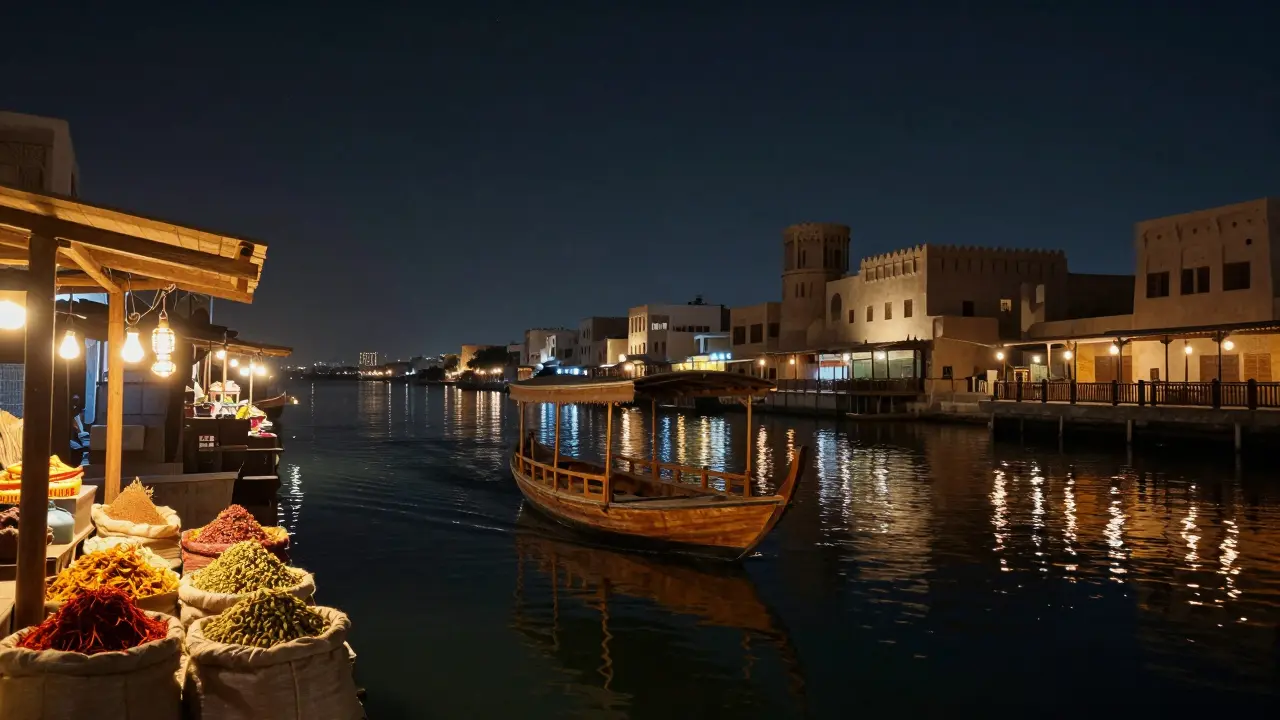
Walk along the Dubai Creek after 9 PM and you’ll see the city’s oldest waterway transform. The abra boats-wooden ferries that have crossed the creek since the 1950s-still run until midnight. A ride costs just 1 AED (about $0.27). The boatmen know the rhythm of the night. They don’t rush. They wait for the moon to rise before crossing.
On the Deira side, the spice souk stays open later than you’d expect. Vendors pack up saffron, cardamom, and dried limes under dim bulbs. Some still sell oud perfume from small glass bottles. The scent lingers in the air-earthy, sweet, ancient. You can buy a vial for 20 AED. It lasts months.
On the Bur Dubai side, the gold souk closes at 10 PM, but the surrounding alleyways buzz with street food. Try balaleet-sweet vermicelli noodles topped with an egg, served warm. Or get a skewer of grilled lamb from the stall run by the same family since 1989. They don’t have a name on the sign. Just a charcoal grill and a man in a white thobe.
Why This Nightlife Matters
Dubai’s official nightlife scene-clubs in Downtown, rooftop bars in Marina-caters to a global crowd. But the soul of the city lives elsewhere. Al Bastakiya and Old Town aren’t curated for visitors. They’re preserved by locals who refuse to let modernization erase their heritage.
There are no neon signs. No VIP sections. No dress codes. You won’t find a bouncer checking IDs. You’ll find a woman offering you a date to eat while you wait for your tea. A teenager playing oud for the first time, nervous but proud. A grandfather telling stories about how the creek used to be the only way in or out of Dubai.
This isn’t entertainment. It’s continuity. And it’s fading. New developments are replacing old homes. Rent prices are rising. Younger generations are moving to suburbs. But for now, this night life still exists. Quiet. Unpolished. Real.
How to Experience It Right
If you want to get it right, follow these simple rules:
- Go after 7 PM. The area wakes up then.
- Wear modest clothing. No shorts or tank tops. Long sleeves and pants are respectful.
- Bring cash. Most places don’t take cards.
- Don’t take photos without asking. Many locals don’t like it.
- Stay until after 10 PM. That’s when the magic happens.
- Don’t expect loud music or dancing. If you do, you’ll miss the point.
Bring a notebook. Or just bring your eyes and ears. The stories here aren’t shouted. They’re whispered.
What to Bring and What to Leave Behind
You don’t need much. A light jacket-nights near the creek get cool. A bottle of water. And patience. Leave your phone on silent. Don’t check your maps constantly. Get lost. That’s how you find the hidden courtyard with the rose bushes and the old man who smiles when you say “shukran.”
Don’t bring expectations shaped by Instagram. This isn’t a backdrop for a selfie. It’s a living space. People eat here. Pray here. Grieve here. Celebrate here. You’re a guest. Be quiet. Be present.
When to Go
Best months: November to March. Temperatures drop to 20°C. The air is crisp. The sky is clear. The nights feel longer.
Avoid summer. June to September is too hot-even at night. The heat sticks to the stone. The streets feel empty. The magic hides.
Weekends are busiest, but weekdays-Tuesday and Wednesday-are quieter. You’ll have the alleys almost to yourself.
Final Thought
Dubai’s Old Town and Al Bastakiya don’t advertise themselves. They don’t need to. The lights are soft. The music is low. The welcome is quiet but deep. If you’re looking for the real Dubai-the one before the skyscrapers, before the luxury brands, before the global spotlight-you’ll find it here. In the steam rising from a teacup. In the silence between oud notes. In the way the moon reflects off the creek’s water like it has for centuries.
It won’t shout at you. But if you listen, it’ll stay with you longer than any club ever could.
Is Al Bastakiya safe to visit at night?
Yes, Al Bastakiya is very safe at night. It’s a well-lit, residential area with low crime. Locals walk the streets after dark, and police patrols are common. The area is popular with families and tourists alike. Just stick to the main alleys and avoid isolated corners near construction sites.
Can I drink alcohol in Old Town or Al Bastakiya?
No. Alcohol is not served in Al Bastakiya or Dubai’s Old Town. These areas follow traditional Emirati customs. You won’t find bars or liquor stores. If you want to drink, head to licensed venues in Downtown or Marina. But you’ll miss the real character of the area if you’re looking for nightlife that includes alcohol.
How do I get to Al Bastakiya from Dubai Airport?
Take the Dubai Metro Red Line to Al Fahidi Station. It’s a 10-minute walk from there. Taxis are also easy-just ask the driver to take you to Al Fahidi Historical Neighbourhood. The ride costs about 25-35 AED. Avoid ride-hailing apps that don’t allow cash; many small cafés here only take dirhams.
Are there restrooms available in Al Bastakiya?
Public restrooms are limited. The Dubai Museum has clean, free facilities open until 8:30 PM. Some cafés allow visitors to use their restrooms if you buy a drink. It’s polite to ask first. Bring tissues-some places don’t provide toilet paper.
What’s the best time to photograph Al Bastakiya at night?
Between 8:30 PM and 9:30 PM, just after sunset. The wind towers catch the last of the blue hour light, and the lanterns turn on. Avoid using flash. Natural light from candles and string lights creates the best atmosphere. Bring a tripod if you want long exposures of the alleyways.
Can I visit Al Bastakiya with children?
Absolutely. It’s one of the most family-friendly areas in Dubai at night. Kids love the narrow alleys, the lanterns, and the chance to see traditional architecture up close. Many cafés offer kid-friendly snacks like dates and laban. Just keep a close eye-some courtyards have uneven stones.