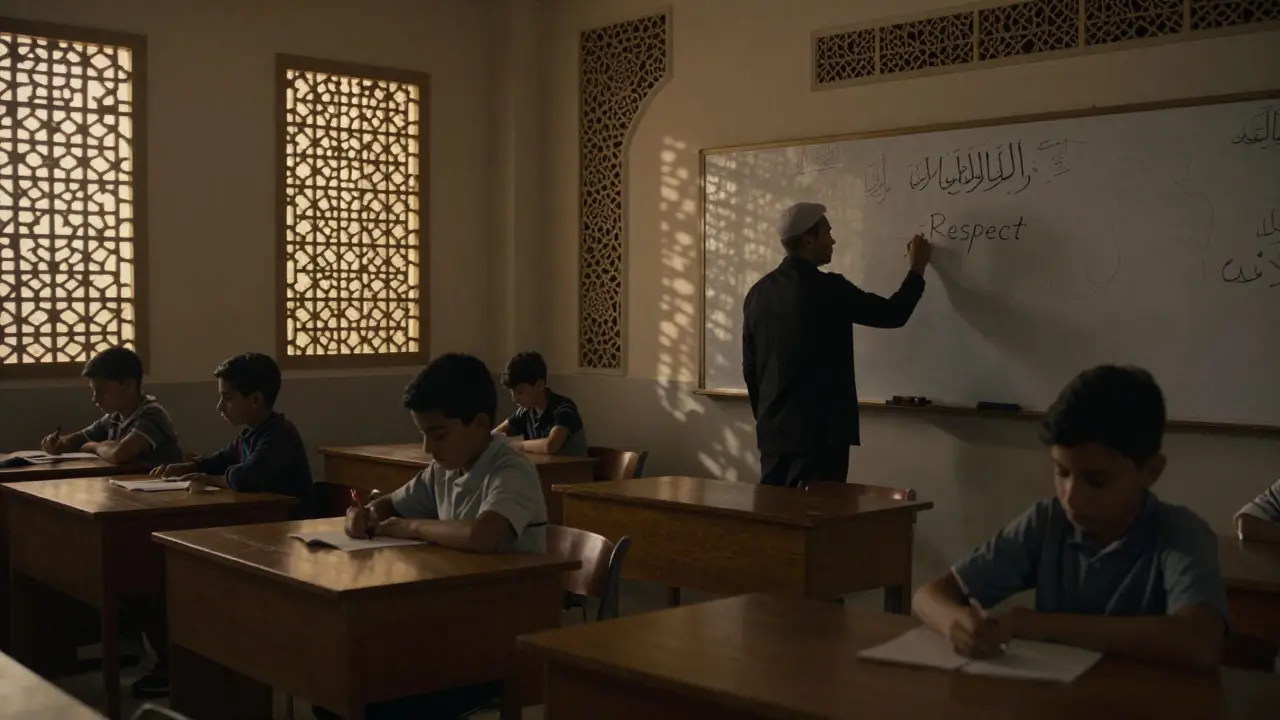
In Dubai, conversations about sex don’t happen in public schools, coffee shops, or family dinners. But that doesn’t mean people aren’t thinking about it. The way Dubai’s youth understand sex, relationships, and boundaries isn’t shaped by open discussions-it’s shaped by what they’re not taught. Education in Dubai doesn’t talk about anatomy, consent, or pleasure. Instead, it talks about modesty, discipline, and tradition. And that silence speaks louder than any lesson plan ever could.
What Gets Taught-and What Doesn’t
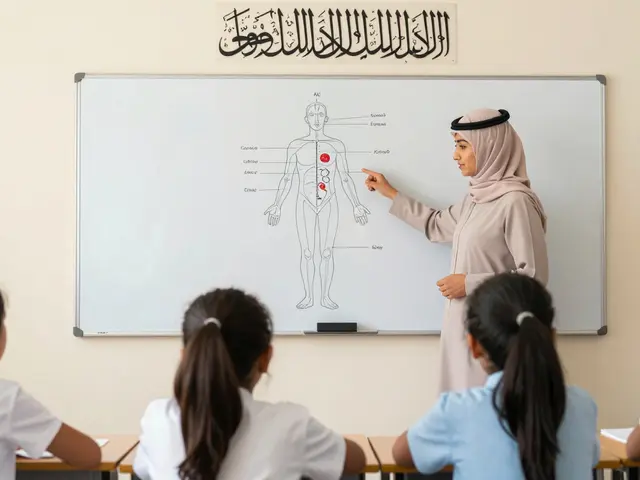
Dubai’s public school curriculum follows the UAE’s national guidelines, which are based on Islamic principles. Sex education, as it exists in Western countries, doesn’t exist here. Students learn about the human body in biology class, but only in the most basic terms: organs are named, reproduction is mentioned as a biological function, and nothing more. There are no diagrams of reproductive systems beyond what’s needed to pass a test. No discussions about contraception. No talks about sexual orientation. No mention of consent beyond a vague reference to "respecting others."
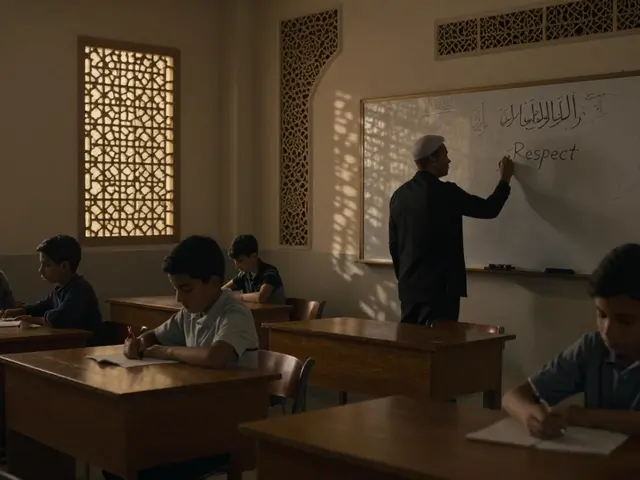
What students do learn is a lot about modesty. Girls are taught to cover their shoulders and knees. Boys are told to avoid eye contact with unrelated women. Moral lessons are woven into Arabic language classes and religious studies. The message is clear: sex is private, sacred, and only for marriage. Outside of that, it’s taboo.
This isn’t just about religion-it’s about control. The state, through schools and media, defines what’s acceptable. And what’s not acceptable? Anything that doesn’t fit the model of a conservative, heterosexual, married life. That leaves a massive gap. Young people grow up with questions but no reliable answers. They turn to the internet. To YouTube. To TikTok. To peer groups. And what they find isn’t always accurate-or safe.
The Internet Fills the Void
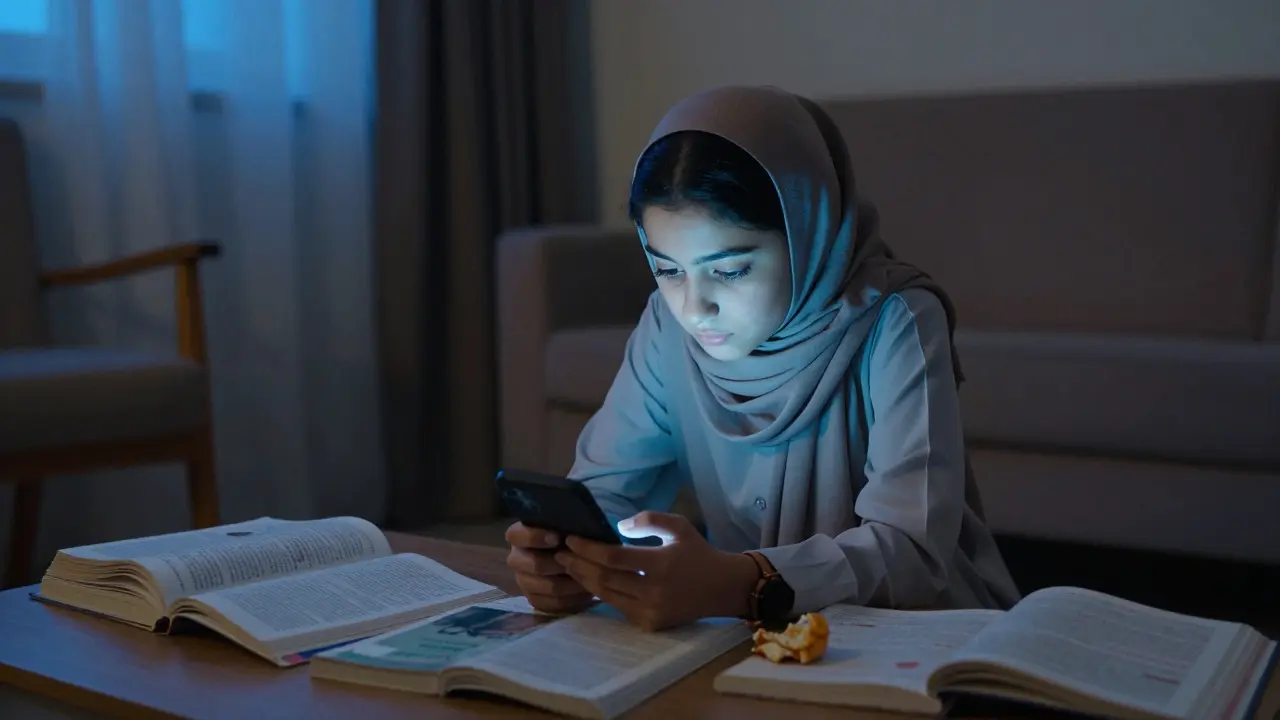
When schools won’t answer questions, the internet will. In Dubai, 98% of teens aged 15-19 have smartphones. Most have access to unrestricted content through VPNs. A 2024 survey by the Dubai Future Foundation found that 72% of Emirati youth learned about sex from online sources, mostly videos and forums. Only 9% said they learned from parents. And 0% said they learned from school.
What does that mean? It means a 16-year-old girl in Al Barsha might watch a pornographic video and think that’s what sex looks like. A 17-year-old boy in Deira might believe that aggression is normal because that’s what he sees in viral clips. There’s no filter. No context. No adult to say, "This isn’t real. This isn’t healthy. This isn’t legal."
And the consequences aren’t theoretical. In 2023, Dubai’s Ministry of Health reported a 27% increase in sexually transmitted infections among people under 25. The same year, the Dubai Police recorded 142 cases of "indecent behavior" involving minors-most linked to online interactions. These aren’t just statistics. They’re signs of a system failing to prepare young people for real life.
Family Silence Is a Cultural Norm
Parents in Dubai don’t talk about sex because they weren’t taught how. Most grew up in households where the topic was never mentioned. If a daughter asked about periods, she was told to "wait until marriage." If a son asked about girls, he was told to "focus on your studies."
There’s a deep fear that talking about sex will make kids curious. But the truth is, curiosity already exists. Silence doesn’t stop it-it distorts it. A 2025 study by the American University in Dubai found that 68% of young adults in the UAE felt ashamed to ask their parents about sex. Many said they felt guilty even thinking about it.
Religious leaders often reinforce this silence. Friday sermons warn against "immoral behavior," but rarely explain what "immoral" actually means. Is it kissing? Holding hands? Using birth control? No one says. So young people guess. And when they guess wrong, they risk legal trouble. In Dubai, premarital sex is illegal. So is sharing explicit content. A single text message can lead to deportation-or worse.
What Happens When Education Is Absent
Without formal education, attitudes toward sex become shaped by fear, misinformation, and stigma. Young people don’t learn to say "no." They don’t learn to recognize coercion. They don’t learn how to protect themselves. They learn to hide.
That’s why gender roles in Dubai are so rigid. Men are expected to be dominant. Women are expected to be passive. Consent isn’t discussed-it’s assumed. If a woman says "no," it’s taken as a challenge, not a boundary. If a man initiates, it’s seen as his right. These aren’t natural beliefs. They’re learned. From silence. From lack of education.
And it affects mental health. Rates of anxiety and depression among young Emiratis have risen sharply since 2020. One in five college students in Dubai report feeling isolated because they can’t talk about their relationships. A counselor at the Dubai Health Authority told me in 2024, "We see patients who think they’re broken because they have desires. They don’t realize those desires are normal. They just weren’t taught that."
Change Is Happening-Slowly
But things are shifting. A few private schools in Dubai, mostly international ones, now offer optional sex education modules. They cover consent, healthy relationships, and digital safety. Some parents are pushing for it. One mother in Jumeirah started a petition after her daughter was sexually harassed at school and no one knew how to help her.
In 2025, the UAE Ministry of Education began pilot programs in three schools to test a new curriculum. It doesn’t talk about sex acts. It talks about respect. Boundaries. Emotional health. And it’s voluntary. Still, it’s a start.
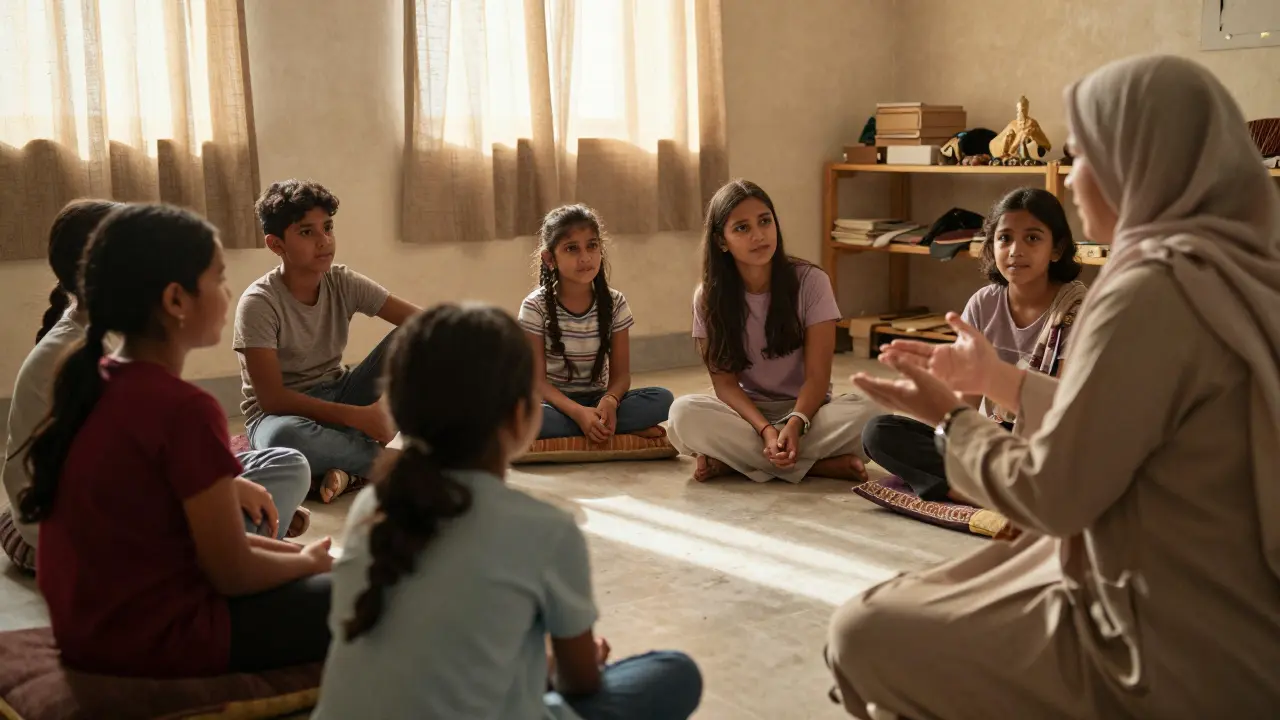
Community centers in Deira and Bur Dubai now host monthly workshops for teens and parents. Topics include "How to Talk to Your Child About Sex" and "Understanding Consent in Islamic Contexts." Attendance is growing. The feedback? Parents say they wish they’d had this when they were young. Teens say they finally feel seen.
Education Isn’t Just About Facts
Sex education isn’t about teaching kids how to have sex. It’s about teaching them how to live. How to respect others. How to protect themselves. How to ask for help.
Dubai doesn’t need to copy Sweden’s curriculum or America’s sex-ed videos. It needs its own version-one that honors culture while protecting people. One that says: "You are allowed to have questions. You are allowed to be confused. You are allowed to be safe."
Right now, the system tells young people to stay quiet. But silence doesn’t protect them. It leaves them vulnerable. Education-real education-can change that. Not by breaking tradition, but by strengthening it with truth.
What Comes Next
If you’re a parent in Dubai and you want to talk to your child about sex, start small. Ask how they feel about relationships. Listen more than you speak. If you’re a teacher, push for training. If you’re a student, find trusted adults-even if they’re not family. Talk to counselors. Reach out to NGOs like the Dubai Women’s Association, which offers confidential youth support.
Change won’t come from a law. It won’t come from a viral post. It will come from one conversation at a time. One parent daring to say, "I don’t know, but let’s find out together." One student finally asking, "Is this normal?" And one school deciding, "We can do better."
The future of sex attitudes in Dubai won’t be shaped by what’s banned. It’ll be shaped by what’s taught-and who’s brave enough to teach it.
Is sex education legal in Dubai schools?
No, comprehensive sex education is not part of the official public school curriculum in Dubai. The national curriculum focuses on Islamic values and modesty, with only basic biological facts taught in science classes. Some private and international schools offer optional modules on relationships and consent, but these are not widespread.
Why is sex education avoided in Dubai?
Sex education is avoided due to cultural and religious norms that view sex as a private matter reserved for marriage. The government and religious authorities believe open discussions could encourage behavior considered immoral. Fear of legal consequences and social stigma also discourage schools and families from addressing the topic.
How do young people in Dubai learn about sex?
Most young people in Dubai learn about sex through the internet-videos, social media, forums, and peer discussions. A 2024 study found 72% of teens relied on online sources, while fewer than 10% learned from parents or school. This leads to widespread misinformation and risky behaviors.
Are there any efforts to improve sex education in Dubai?
Yes. Since 2025, the UAE Ministry of Education has launched pilot programs in three schools to test a new curriculum focused on consent, emotional health, and respectful relationships. Community organizations also run workshops for teens and parents. These are still small-scale, but they mark the first official steps toward change.
What are the risks of not having sex education?
Without education, young people face higher risks of STIs, unwanted pregnancies, sexual harassment, and mental health issues. They also struggle to recognize abuse or consent. In Dubai, premarital sex and sharing explicit content are illegal, so misinformation can lead to serious legal consequences, including deportation or criminal charges.