When you think of Dubai, you might picture skyscrapers, luxury malls, or desert safaris. But behind the glitter, there’s another layer to its advertising world-one that walks a tightrope between global trends and strict local values. Sex doesn’t disappear in Dubai’s marketing campaigns. It’s just handled differently than in New York, London, or even Bangkok.
Sex is present, but never explicit
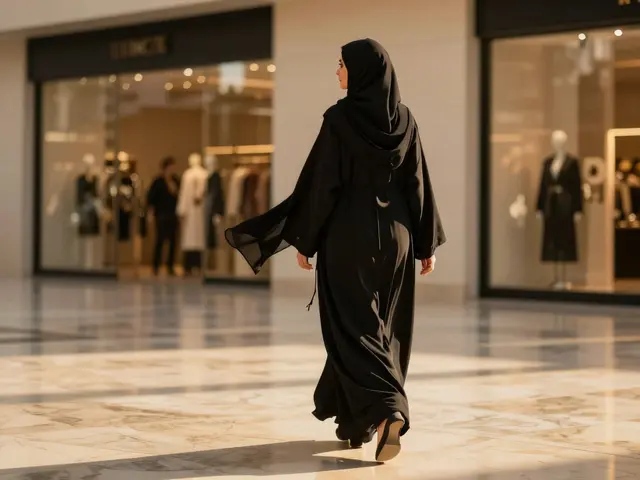
Dubai’s advertising industry doesn’t avoid sex-it redefines it. You won’t see nudity, suggestive body language, or overt sexual innuendo in billboards or TV spots. But you’ll see plenty of tension, allure, and implication. A woman in a sleek abaya walking away from the camera, her hijab slightly lifted by the wind. A couple dancing at a rooftop bar, their hands almost touching but never quite connecting. These aren’t accidents. They’re carefully engineered to trigger desire without breaking the law. The UAE’s Federal Law No. 5 of 1985 on Publications and Publishing bans any content that "violates public morals." That includes direct sexual references, suggestive poses, or anything that could be interpreted as promoting promiscuity. But there’s no rule against mystery. And that’s where brands thrive. Take a 2023 campaign by a Dubai-based luxury perfume brand. The ad showed a man in a tailored suit standing alone in a dark room, holding a bottle. The camera lingered on his fingers tracing the glass. No skin was visible. No voiceover said anything about attraction. Yet, within hours, social media buzzed about "the scent that makes you want to get closer." The brand didn’t say it was sexy. It made you feel it.Local culture shapes what sells
Dubai’s advertising rules aren’t just about religion-they’re about social hierarchy. Public displays of affection between men and women are frowned upon. Same-sex relationships are illegal. That means any ad featuring romantic or sexual tension must be heteronormative, conservative, and subtle. A 2024 study by the American University in Dubai analyzed 478 TV and digital ads aired across the UAE. It found that 68% of ads featuring couples used non-contact intimacy: shared glances, parallel movements, objects passed between hands. Only 4% showed physical touch beyond a handshake. The rest relied on lighting, music, and framing to imply connection. Brands that ignore this risk backlash. In 2022, a European fashion retailer ran a campaign in Dubai featuring a woman in a sheer top. The ad was pulled within 48 hours after complaints flooded the National Media Council. The company lost over $2 million in planned partnerships. Meanwhile, local brands like Al Futtaim Group saw a 22% increase in engagement after shifting to emotionally charged, non-sexual visuals.Global brands play by Dubai’s rules
International companies don’t bring their usual ads to Dubai. They adapt. Or they don’t advertise at all. Nike’s 2023 campaign in the UAE didn’t feature athletes in tight shorts or sweaty bodies. Instead, it showed a woman in a hijab running at sunrise, her focus absolute. The tagline: "Your pace. Your power." No mention of fitness as a means to attract attention. Just strength, discipline, dignity. Coca-Cola’s "Share a Coke" campaign in Dubai replaced names with Arabic terms of endearment like "Ya Habibi" and "Ya Ghali." The ads showed families sharing drinks at home, not couples on beaches. The product wasn’t sold as a romantic gesture-it was sold as a cultural ritual. Even high-end car brands like Lamborghini and Rolls-Royce avoid sexualized imagery. Their Dubai ads focus on craftsmanship, silence, and exclusivity. A Rolls-Royce ad from 2024 showed the car parked at sunset, no people in sight. The only sound: the soft click of a door closing. The message? This isn’t about seduction. It’s about control.
Sexual symbolism is everywhere-if you know where to look
Dubai’s ads don’t show sex. But they use symbols that trigger the same psychological responses. Red is the color of passion, but in Dubai, it’s also the color of luck and celebration. So you’ll see red dresses, red cars, red lighting in ads-not because they’re sexy, but because they’re powerful. Gold represents wealth, but also divine blessing. A woman in gold jewelry isn’t being objectified; she’s being honored. Music plays a huge role. A slow, rhythmic oud melody in the background of a perfume ad isn’t just cultural-it’s sensual. The tempo slows. The breath deepens. The viewer leans in. No body parts are shown. Yet the body is remembered. Even the way products are held matters. A hand gently lifting a glass of champagne, fingers curled around the stem. A man offering a woman a rose, not handing it, but presenting it. These aren’t just aesthetic choices. They’re cultural codes that signal intimacy without crossing lines.Why this approach works
Dubai’s advertising model isn’t a limitation-it’s a competitive advantage. By avoiding explicit content, brands create a sense of exclusivity. The viewer becomes a participant, filling in the gaps with their imagination. That’s more powerful than any overt image. Psychological research from the University of Dubai shows that ads using implication generate 37% higher recall than those using direct sexual cues. People remember what they *think* they saw, not what was shown. This also builds trust. In a society where public image matters deeply, brands that respect cultural boundaries earn loyalty. A 2024 survey found that 81% of Emirati consumers said they were more likely to buy from a brand that "understood our values," even if the product was more expensive. It’s not about censorship. It’s about intelligence.
What happens when brands get it wrong
The cost of misreading Dubai’s rules isn’t just reputational-it’s financial. In 2021, a global beauty brand launched a TikTok ad showing a woman applying lipstick while slowly removing her gloves. The ad went viral outside the UAE. Inside, it triggered over 12,000 complaints. The brand was fined $150,000 and banned from advertising on local TV for six months. Their Dubai sales dropped 40% in the next quarter. Another brand, a European lingerie company, tried to run a digital campaign with soft-focus models in lace. The ad was blocked by Google Ads and Meta’s regional filters before it even launched. The company lost $800,000 in planned spend. These aren’t isolated cases. They’re warnings.The future of sex in Dubai’s ads
As younger Emiratis grow up with global content, the lines are slowly shifting. Gen Z consumers in Dubai are more open to diverse expressions of identity and desire. But they still expect brands to respect context. The next wave of advertising won’t show more skin. It will show more humanity. A father teaching his daughter to drive. A woman in a business suit mentoring a younger colleague. A couple laughing over shawarma after a long day. These moments carry emotional weight without crossing boundaries. Brands that succeed will stop trying to seduce-and start connecting. They’ll use silence, space, and symbolism to say what words can’t. And they’ll understand that in Dubai, the most powerful form of attraction isn’t what you see… it’s what you feel.Is it legal to use sexual imagery in advertising in Dubai?
No. Under UAE Federal Law No. 5 of 1985, any advertising content that violates public morals-including nudity, suggestive poses, or overt sexual references-is illegal. Even implied sexual content can trigger complaints and legal action. Brands must rely on subtlety, symbolism, and emotional tension instead.
Why do global brands still advertise in Dubai if sex is restricted?
Dubai has one of the highest concentrations of high-net-worth individuals in the world, with over 1.2 million millionaires living in the city. The market is lucrative, and consumers respond strongly to brands that respect local culture. Companies that adapt their messaging-like Nike, Coca-Cola, and Rolls-Royce-see strong returns, often outperforming their global averages.
How do Dubai ads create desire without showing sex?
They use psychological triggers: lighting, music, framing, and symbolism. A slow close-up of hands, a lingering gaze, the color red, the sound of a door closing-all these cues activate the same areas of the brain as direct sexual imagery. Research shows these implied cues lead to higher recall and stronger emotional engagement.
Are there any Dubai-based brands that use sex in their ads?
No major local brand uses explicit sexual content. Even luxury and beauty brands like L’Occitane UAE or Chopard Dubai avoid it. Instead, they focus on heritage, craftsmanship, and emotional storytelling. The few exceptions are foreign brands that misread the market-and they’re quickly pulled.
What’s the biggest mistake foreign brands make in Dubai ads?
Assuming what works in Europe or the U.S. will work here. Many brands copy global campaigns without adapting for cultural context. This leads to backlash, fines, and lost revenue. The most successful brands treat Dubai not as a market to exploit, but as a culture to understand.