When you think of Dubai, you probably picture glittering skyscrapers, luxury malls, or beach clubs with international DJs. But after the sun goes down, something quieter and deeper happens - the soul of the city wakes up in a way most tourists never see. This isn’t about neon lights or bottle service. This is about Emirati night life - the real, lived-in traditions that have shaped evenings in the UAE for generations.
What Emirati Night Life Actually Looks Like
Forget what you’ve seen in movies. True Emirati evenings don’t start with loud music. They start with tea.
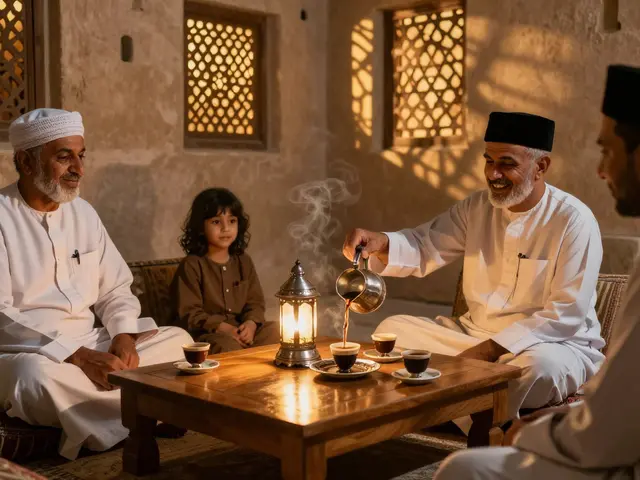
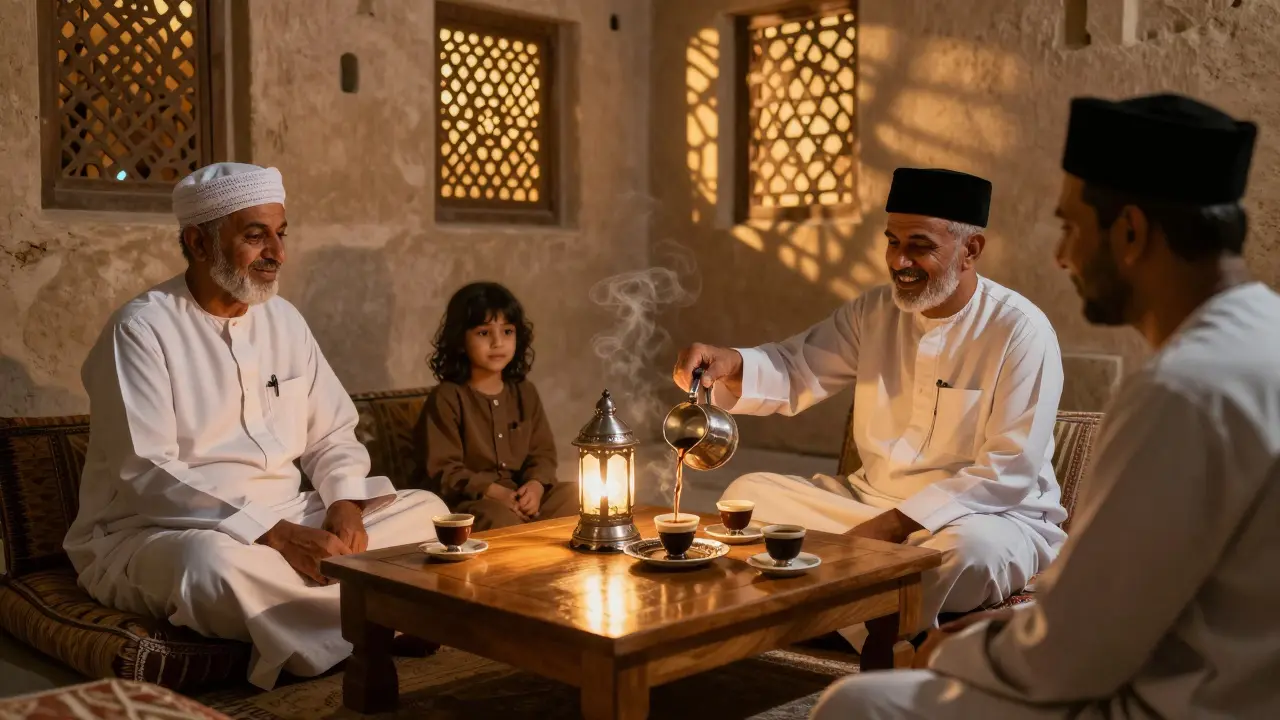
After dinner, families gather in majlis - low, cushioned seating areas around a central table. Coffee is served in small cups called finjan, poured from a long-spouted pot called a dallah. It’s not rushed. It’s not for show. It’s a ritual. The coffee is often spiced with cardamom, sometimes with saffron or rosewater. You sip slowly. You talk. You listen.
Men and women may sit separately, especially in more traditional homes, but the atmosphere is never cold. Laughter comes easily. Stories are told - about desert camels, fishing trips off the coast of Fujairah, or the time a cousin got lost in the dunes during a sandstorm. These aren’t just stories. They’re how history is passed down.
The Sound of the Night: Al Ard and Al Yowl
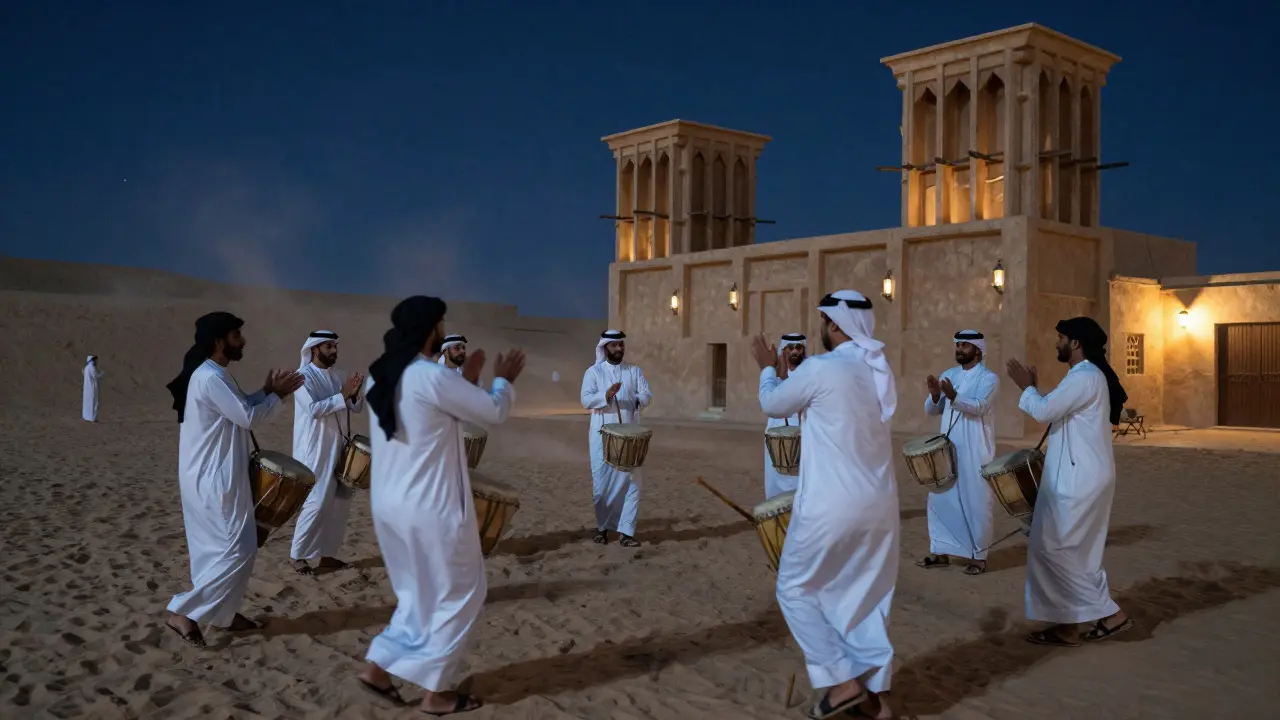
On Friday nights in older neighborhoods like Al Fahidi or Al Shindagha, you might hear drums. Not the thumping bass of a club, but the steady rhythm of the al ard - a traditional Emirati dance performed by men in white thobes and black headscarves. The drummers sit in a circle. Dancers move in unison, swords or canes clapping together in time. It’s a celebration of unity, courage, and heritage.
Women have their own tradition: al yowl. A call-and-response song, usually sung in groups, with hand-clapping and rhythmic swaying. The lyrics are poetic, often about love, nature, or the desert. You won’t find this on Spotify. But if you’re lucky enough to be invited to a family gathering, you’ll hear it - raw, beautiful, and alive.
Where to Find It Today
You won’t stumble into this by accident. You have to be invited - or know where to look.
Start with the Dubai Culture & Arts Authority. They host weekly evening events in heritage districts. One popular spot is the Al Fahidi Historical Neighbourhood, where lantern-lit alleys lead to restored wind-tower houses. Every Thursday, there’s a free cultural evening: storytelling, traditional music, and dates served with camel milk.
Another option is the Al Qasba area in Sharjah - just a 20-minute drive from Dubai. It’s not flashy. No billboards. Just a quiet lake, a small open-air theater, and nightly performances of Emirati folk tales. Locals bring their kids. Tourists sit quietly in the back. No one takes photos. Everyone listens.
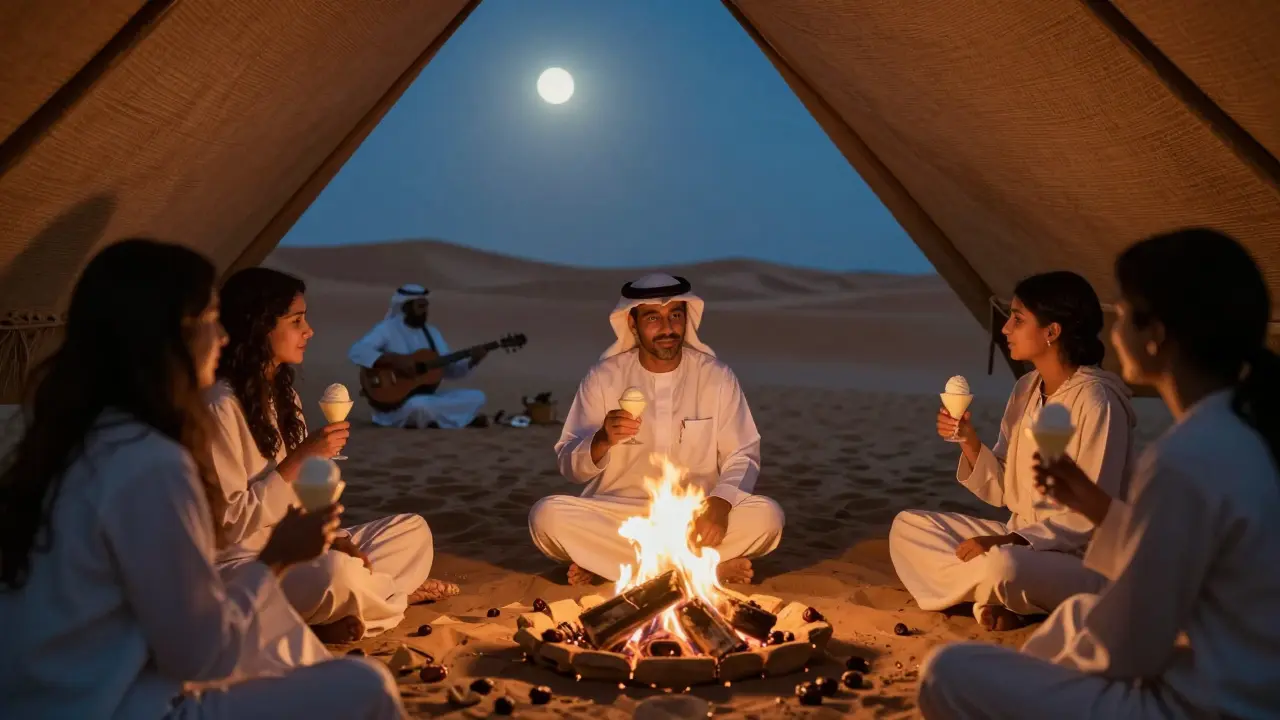
Some hotels now offer curated experiences. The Jumeirah Al Naseem runs a weekly Bedouin Night - complete with sand dune storytelling, lantern-lit tents, and live oud music. It’s not cheap, but it’s authentic. No fake camels. No performers in costumes. Just real Emirati storytellers who grew up in the desert.
The Food That Defines the Night
Emirati night life isn’t complete without food. And it’s not about fancy plates. It’s about warmth.
Harees - wheat and meat cooked slow until it’s creamy - is a staple. Served with ghee and cinnamon. Luqaimat - sweet fried dough balls drizzled with date syrup - are eaten after dinner, sometimes as late as midnight. You’ll find them at roadside stalls in Deira, especially on weekends.
Don’t skip the camel milk ice cream. Yes, it’s real. It’s creamy, slightly tangy, and surprisingly refreshing. You’ll find it at the Camel Milk Factory in Al Ain, or at the Al Maha Desert Resort’s evening tent.
And yes - you’ll be offered dates. Always. Not as a snack. As a sign of welcome. Eat them. Say thank you. That’s part of the culture.
Why This Matters
Dubai’s skyline changes every year. New towers rise. New brands open. But the rhythm of Emirati nights? It hasn’t changed much in 50 years.
That’s because these traditions aren’t for tourists. They’re for connection. For memory. For identity.
When you sit in a majlis, sipping coffee as the call to prayer echoes in the distance, you’re not just experiencing a culture. You’re stepping into a rhythm that’s older than the city itself. It’s quiet. It’s slow. It’s deeply human.
Most visitors leave Dubai remembering the Burj Khalifa. Those who stay for the night remember the sound of a dallah pouring coffee, the smell of cardamom, and the quiet laughter of strangers who, for a few hours, became family.
What You Need to Know Before You Go
- Dress modestly - long sleeves and pants are expected in cultural spaces.
- Arrive on time. Punctuality matters more than you think.
- Don’t take photos without asking. Many families prefer privacy.
- Bring cash. Most traditional events don’t accept cards.
- Don’t rush. These experiences aren’t meant to be checked off a list.
How to Plan Your Night
If you want to experience this properly, plan ahead.
- Check the Dubai Culture official website for monthly event calendars.
- Book a guided cultural tour through Al Fahidi Heritage Tours - they offer private evening visits.
- Ask your hotel concierge for a connection to a local family - some offer home-hosted dinners.
- Visit during Ramadan if you can. The night atmosphere is electric - but respectful. Iftar gatherings are open to visitors who dress modestly and arrive with humility.
Don’t go looking for nightlife. Go looking for connection.
Is Emirati night life only for locals?
No. While many traditions are family-centered, cultural centers and heritage sites actively welcome respectful visitors. Events like storytelling nights, traditional music performances, and heritage walks are open to the public. The key is to approach with curiosity, not as a spectator. Many locals are happy to share - if you show genuine interest and follow simple cultural norms like dressing modestly and arriving on time.
Can I experience Emirati night life without a tour?
Yes, but it’s harder. The most authentic experiences happen in homes or small community gatherings, which are often by invitation only. However, you can still witness public traditions. Visit Al Fahidi at night. Attend a free cultural evening at the Dubai Culture center. Eat at a local restaurant like Al Fanar or Al Dhiyafah, where Emirati music plays softly in the background. These are real, not staged. You don’t need a tour - just patience and openness.
Are there any night markets with Emirati crafts?
The best one is the Alserkal Avenue Night Market, held monthly. It’s not a typical bazaar. It’s a gathering of Emirati artisans - weavers, calligraphers, pottery makers - who sell handmade items directly. You’ll find woven baskets, silver jewelry with Bedouin designs, and hand-painted oud instruments. It’s quiet, respectful, and never crowded. No vendors shout. No pressure to buy. Just craft, conversation, and coffee.
What’s the best time of year to experience this?
October to March is ideal. The weather is cool enough for evening outdoor events. Ramadan is especially powerful - if you’re comfortable with the cultural context. The nights are longer, the atmosphere more spiritual, and community gatherings more frequent. Avoid July and August - the heat makes outdoor traditions rare. Most events pause during the hottest months.
Is it safe for solo travelers to attend these events?
Yes - if you follow basic rules. Stick to public, organized events like those hosted by Dubai Culture. Avoid going to private homes unless invited. Dress conservatively. Don’t drink alcohol in public areas. Be respectful of prayer times. Most locals are warm and helpful. You’ll find that people will often offer to walk you to your car or give you directions. The culture values hospitality deeply.