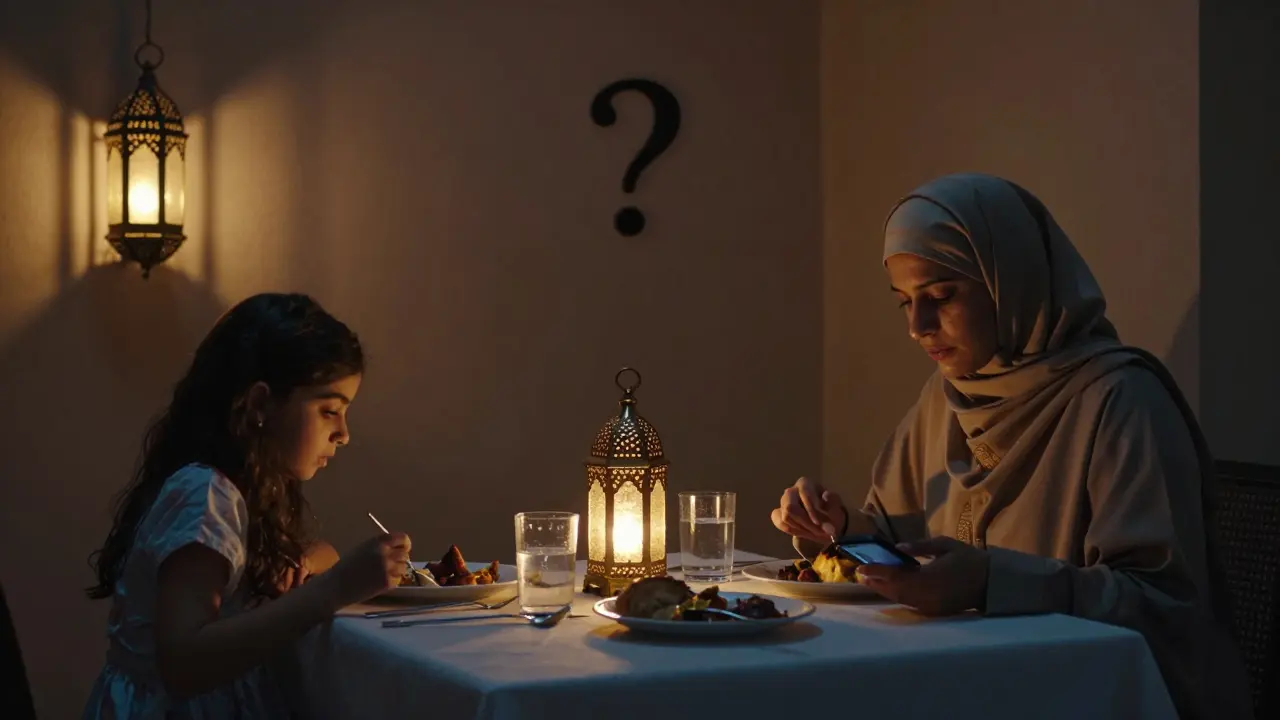
In Dubai, conversations about sex don’t happen in public. They happen at the dinner table, during Friday prayers, in the quiet moments between mothers and daughters, and in the hushed tones of uncles talking to teenage nephews. Unlike in many Western cities, where sex education comes from schools or streaming platforms, in Dubai, it comes from home-from the unspoken rules passed down through generations, from the weight of reputation, and from the fear of shame.
Family Is the First Teacher
Most Emirati children learn about sex not from textbooks, but from silence. Parents avoid direct talks about bodies, attraction, or intimacy. When questions arise, the answer is often, "That’s not for you to worry about yet," or a sharp change of subject. This isn’t because families are unloving-it’s because they’re deeply protective. In a society where honor is tied to family reputation, talking openly about sex is seen as risky. A girl caught dating in high school doesn’t just face punishment-she risks her family’s standing in the neighborhood. A boy who talks about sex with friends might be labeled "loose," a word that sticks longer than any grade.
But silence doesn’t mean ignorance. Many teenagers in Dubai know more than their parents think. They’ve seen videos, read forums, or heard stories from older cousins. The problem isn’t lack of information-it’s lack of context. Without guidance, they’re left to interpret what they see through the lens of fear: "If I do this, will my family disown me? Will people whisper behind my back?"
Community Pressure Is a Silent Enforcer
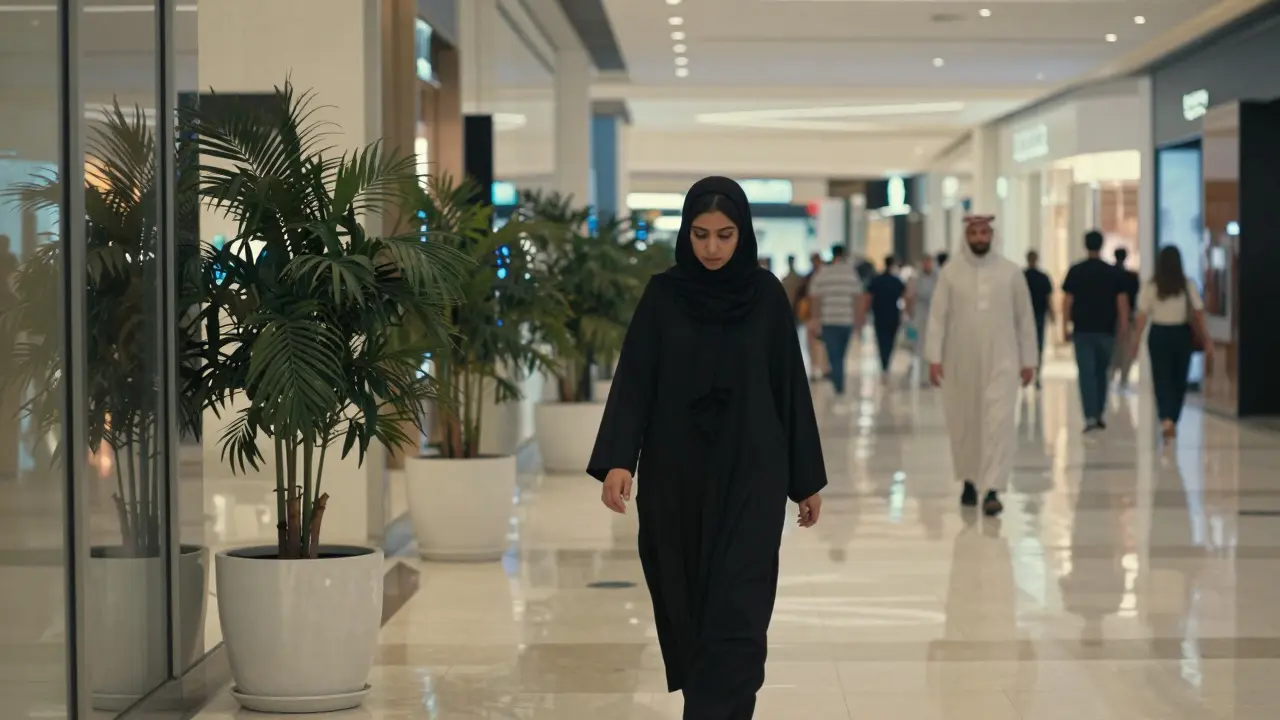
Dubai’s community isn’t just a group of neighbors-it’s a surveillance system made of glances, gossip, and social codes. If a young woman walks home late from work, people notice. If a couple holds hands in a mall, someone takes a photo. If a teenager is seen with someone of the opposite gender outside family circles, rumors start within hours.
These aren’t just social norms-they’re survival mechanisms. In a city where 90% of the population is expatriate, Emirati families rely heavily on tight-knit networks for safety, support, and social validation. Breaking norms doesn’t just risk personal shame-it can isolate a family from the very community that helps them navigate life here. That’s why even expat families, who come from more liberal backgrounds, often adapt. An American mother might tell her daughter, "Don’t wear that skirt to the mall," not because she believes it’s wrong, but because she knows the consequences if someone reports it.
Religious values play a role, yes-but it’s not just about Islam. It’s about how those values are lived out in a place where tradition and modernity collide daily. You can see it in the way schools teach "Islamic ethics" instead of biology-based sex education. Or how public health campaigns focus on "family values" rather than safe sex. The message is clear: sex is private. Sex is sacred. Sex is not for discussion.
What Happens When Young People Leave Dubai?
Many Emirati students who study abroad return with a different view of sex. They’ve had access to comprehensive sex education, open conversations with peers, and access to contraception. Some come back quietly curious. Others come back rebellious. Either way, they’re caught between two worlds.
A 22-year-old Emirati woman who studied in Canada told me she didn’t tell her parents she used birth control until she was 24. When she finally did, her mother cried-not because she was angry, but because she felt she’d failed. "I didn’t teach you how to protect yourself," she said. "I only taught you to hide it."
That’s the hidden cost of silence. It doesn’t prevent sex-it prevents safety. Studies from the UAE Ministry of Health show that teenage pregnancy rates among Emiratis have risen 18% since 2020, even as condom use among young adults remains below 30%. Why? Because when you’re taught to fear sex, you don’t learn how to manage it.
Changing Tides, Slowly
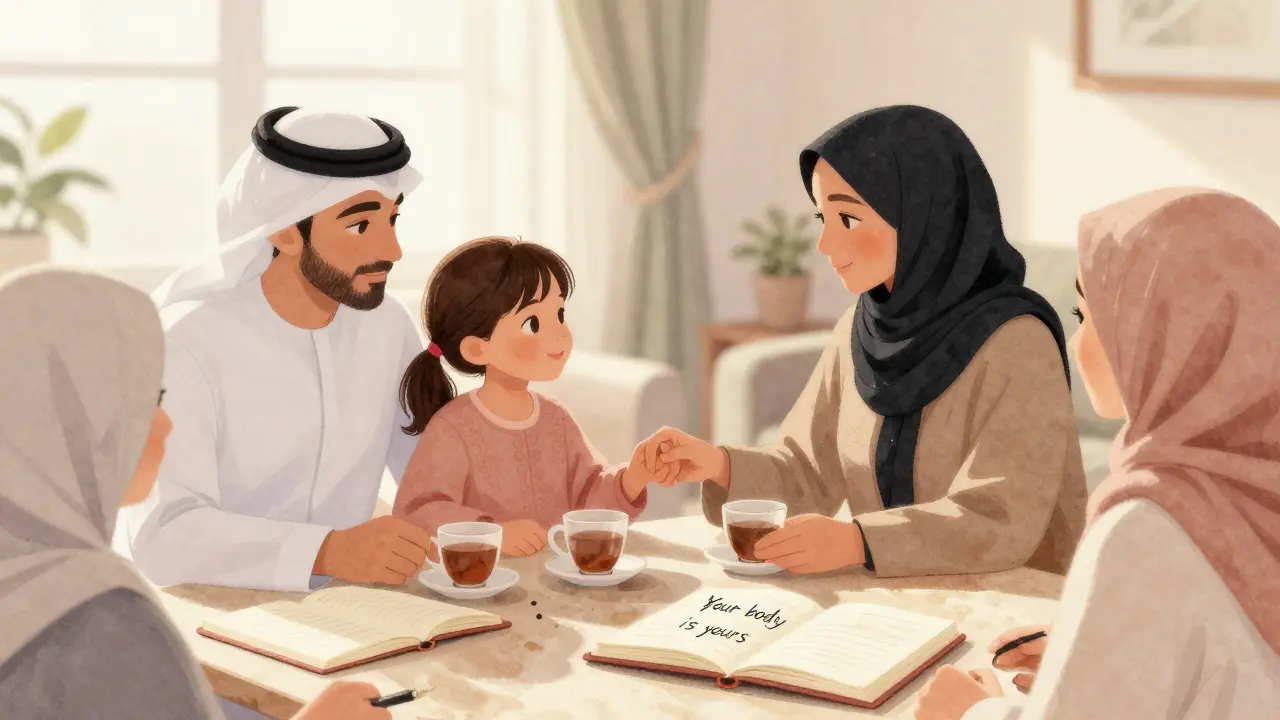
Change is happening-but not through protests or policy. It’s happening in living rooms. In 2023, a group of Emirati mothers in Al Barsha started an informal support circle. They didn’t call it a sex education group. They called it "Parenting Together." They met every Thursday after school to talk about raising teens in Dubai. They shared stories about their kids’ questions, their own fears, and how they wished they’d been taught.
One mother started using simple phrases: "Your body is yours," "It’s okay to say no," "You don’t have to be perfect." Her daughter, 16, began asking questions. Not in shame, but in curiosity. That’s the shift. Not rebellion. Not revolution. Just honesty.
Some schools are starting to pilot programs. In 2025, a few private schools in Dubai introduced optional workshops called "Healthy Relationships," led by trained counselors. They don’t show diagrams or discuss techniques. They talk about consent, boundaries, respect, and emotional health. Attendance is voluntary. But over 70% of students who joined said they wished they’d had this earlier.
What This Means for the Future
Dubai won’t become Amsterdam. It won’t start teaching sex ed in public schools like Sweden. But it doesn’t need to. The real change isn’t in laws or curriculums-it’s in how families talk to each other. When parents stop treating sex like a secret to be feared and start treating it like a part of life to be understood, things begin to shift.
The next generation won’t need to hide. They’ll need to know. And that knowledge will come not from the internet, not from TV, but from the people who raised them: their mothers, their fathers, their aunts, their uncles. The community doesn’t have to change its values. It just has to change how it passes them on.
Why Silence Doesn’t Protect-It Endangers
For decades, Dubai’s approach to sex was based on control: control behavior, control language, control access. But control without education doesn’t stop risk-it hides it. Mental health issues among teens are rising. Rates of anxiety around intimacy are climbing. Young adults report feeling confused, guilty, and alone.
Compare that to countries that talk openly. In the Netherlands, where sex education starts at age 4, teen pregnancy rates are among the lowest in the world. It’s not because Dutch teens are having more sex-it’s because they know how to have it safely. They’re not ashamed to ask questions. They’re not afraid to use protection.
Dubai doesn’t need to copy the Netherlands. It needs to find its own middle ground. One where tradition isn’t abandoned, but deepened. Where protection isn’t seen as rebellion, but responsibility. Where love isn’t forbidden, but understood.
Why is sex such a taboo topic in Dubai?
Sex is considered private and sacred in Emirati culture, tied closely to family honor and religious values. Open discussion is avoided to prevent shame, social stigma, or damage to reputation. The fear of gossip and judgment from the community makes even basic questions feel risky.
Do Emirati families ever talk about sex at all?
Most families avoid direct conversations, but they do communicate indirectly-through rules, warnings, and silence. Some families, especially younger ones influenced by global exposure, are starting to speak more openly. Informal parent groups and school workshops are helping break the silence, but it’s still rare.
How do expats handle sex education in Dubai?
Many expat parents struggle to balance their own cultural norms with Dubai’s strict social environment. Some choose to teach their children at home using Western materials, while others adapt to local norms to avoid conflict. Many report feeling torn between protecting their kids and respecting local customs.
Is there any formal sex education in Dubai schools?
Public schools teach Islamic ethics and moral guidelines, but not comprehensive sex education. Some private schools began pilot programs in 2025 called "Healthy Relationships," focusing on consent, boundaries, and emotional health-not biology or techniques. These are optional and not yet widespread.
What’s the biggest risk of not talking about sex?
The biggest risk is unsafe behavior. Without accurate information, young people turn to unreliable sources like social media or peers. This leads to higher rates of unintended pregnancy, STIs, and emotional distress. Silence doesn’t stop sex-it stops safety.
Are attitudes toward sex changing in Dubai?
Yes, slowly. Younger generations, especially those who studied abroad or have global exposure, are pushing for more openness. Parents are starting to talk in private circles. Schools are testing new programs. The change isn’t loud-it’s quiet, happening in homes, not headlines.